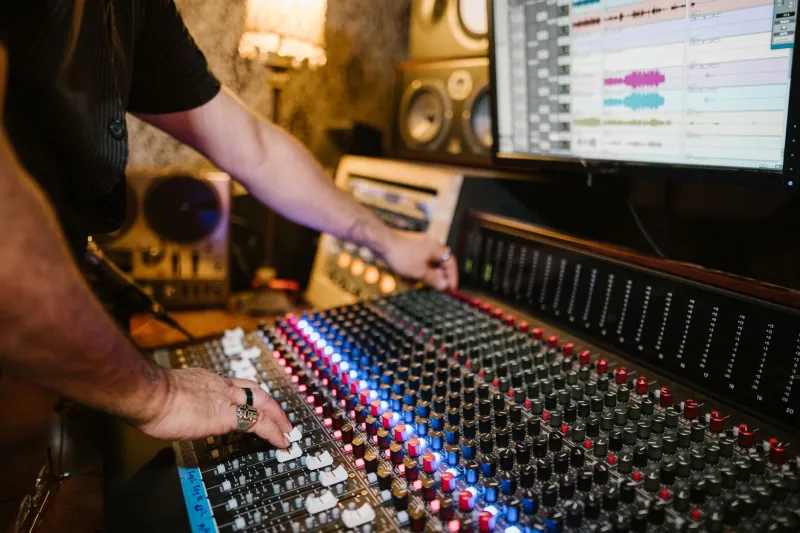
Frame by Frame: How Underground Motion Designers Became the Music World's Best-Kept Secret
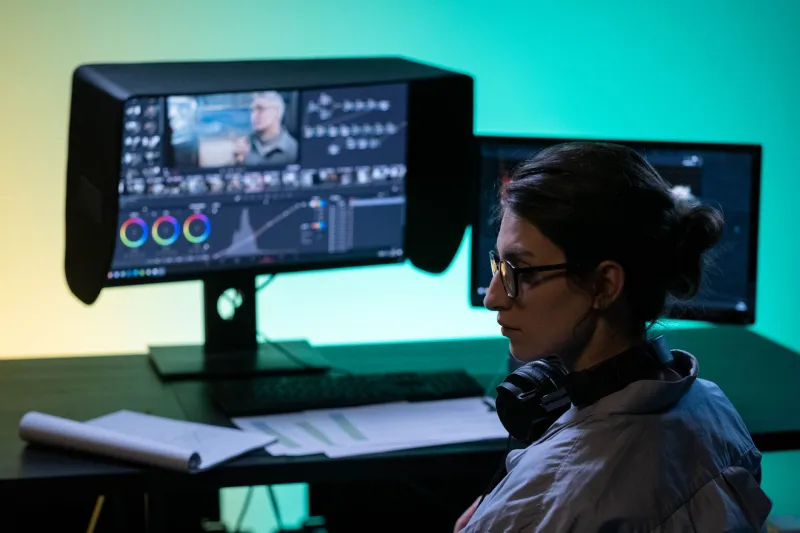
There's a moment — you've probably experienced it — where you stumble across an artist's video, their album visualizer, or even just a looping clip on their Instagram page, and something about it just hits. The colors feel intentional. The movement feels like an extension of the sound itself. You don't know why it works, but you can't look away.
Chances are, that feeling wasn't an accident. And chances are, the person responsible for it isn't someone you've ever heard of.
Motion design has quietly become one of the most powerful forces in independent music, and the people doing the most interesting work in that space are operating almost entirely under the radar. They're not on billboards. They don't have agency representation. But they're shaping the visual language of artists who are breaking through right now — and the music industry is slowly, somewhat reluctantly, waking up to that fact.
The New Visual Language of Independent Music
For a long time, the visual side of a music career was treated like a luxury — something you sorted out after you had a budget. Major labels had in-house creative teams and rolodexes full of established directors. Independent artists, for the most part, made do with whatever they could afford, which usually meant static graphics and the occasional lyric video slapped together in iMovie.
That calculus has completely changed. Streaming platforms, short-form video, and the sheer volume of content competing for attention have made visual identity a survival tool, not a bonus feature. An artist's aesthetic — the way their content moves, the palette they own, the visual grammar that connects their singles, their merch drops, their live streams — is now just as load-bearing as the music itself.
And here's the thing: motion designers understood this before most label executives did.
"The artists who were paying attention figured out early that a well-crafted visual could do the work of a press campaign," says one Brooklyn-based motion designer who's built visuals for several artists now sitting comfortably in the mid-six-figure streaming range. She asked not to be named because several of those artists haven't publicly credited her work. "A 15-second loop that feels right gets shared. It gets used as background content. It becomes part of someone's identity in a way that a static image never could."
Who's Actually Doing This Work?
The designers reshaping this space tend to share a few things in common. Most of them came up through online communities — motion design forums, After Effects tutorial rabbit holes, Discord servers where people share work and tear it apart in equal measure. Many of them have day jobs or freelance across industries, doing motion work for apps, brands, or content creators while carving out space to collaborate with musicians who can't pay agency rates but offer something arguably more valuable: creative freedom.
Take the loose network of designers centered around cities like Atlanta, Chicago, and Los Angeles who've been trading techniques and referrals for the better part of a decade. Some of them have built recognizable visual signatures — specific ways of handling typography in motion, particular approaches to color grading that bleed from the video into the album art — that have become shorthand for a certain kind of serious, aesthetically coherent independent act.
Labels have noticed. Not always loudly, but the scouting is happening. A&R departments that once focused entirely on sound are increasingly asking questions about who built a given artist's visual world. Some of the more forward-thinking indie labels have started approaching motion designers directly, not to hire them full-time, but to build relationships before the artists they're working with blow up and pricing becomes a conversation.
Why This Talent Is So Hard to Find — and So Easy to Lose
Here's the uncomfortable truth about this ecosystem: it runs almost entirely on word of mouth and trust, which makes it both remarkably effective and genuinely fragile.
These designers aren't listing their best work on Behance or pitching themselves through traditional channels. Their portfolios live in private links, shared in DMs, referenced in conversations between artists who've worked with them. When a musician blows up, the designer who built their visual identity often doesn't come along for the ride — at least not officially. Bigger budgets mean bigger agencies, and bigger agencies mean the underground collaborator gets quietly replaced, sometimes without acknowledgment.
"There's a version of this where you do the most important visual work of someone's career and then watch a major label hand that aesthetic to a production company that charges ten times what you did," says one Chicago-based designer who's navigated exactly that situation more than once. "It's frustrating. But it's also just how the industry works right now. The leverage is shifting, but slowly."
The leverage is shifting, in part, because artists themselves are getting smarter about it. More independent musicians are treating their visual collaborators the way they treat their producers — as creative partners with a stake in the outcome, not vendors to be swapped out when the budget changes. Co-credits are becoming more common. Some designers are negotiating small backend arrangements tied to streaming or sync deals. It's still the exception rather than the rule, but the conversation is happening.
The Skill Set That Doesn't Have a Job Title Yet
Part of what makes this field so hard to quantify — and so easy for the industry to overlook — is that the best motion designers working in music right now aren't just technically proficient. They're doing something more like visual A&R.
They're listening to unreleased music and translating emotional texture into movement. They're building systems — not just one-off videos, but visual frameworks that can scale across an entire era of an artist's career. They understand pacing in a way that's almost musical. They know that a three-second loop on a streaming platform has to work differently than a four-minute visualizer on YouTube, and they're building for both simultaneously.
That's a rare combination of technical skill, aesthetic intuition, and strategic thinking. And it's being developed almost entirely outside of formal institutions, through self-teaching, peer feedback, and the relentless pressure of working with artists who need results on a budget that doesn't allow for mistakes.
The Discovery Gap
For a platform like this one, the story of underground motion designers is almost a perfect encapsulation of what "hidden talent" actually means. These aren't people who failed to make it. They're not waiting to be discovered in the traditional sense. They're already doing the work, already producing results that are shaping what independent music looks and feels like in America right now.
The gap isn't talent. It's visibility. And visibility, as anyone in this field will tell you, is kind of the whole point.
If you've been sleeping on the visual side of your favorite underground artist's identity, it might be worth asking who built it. The name you find — or can't find — might be the most interesting person in the room.