The Invisible Architects: How Underground Recording Engineers Are Quietly Defining the Sound of Tomorrow
There's a moment in every great record where something just clicks. The low end sits perfectly. The vocal floats exactly where it should. The whole thing feels less like a collection of sounds and more like a living, breathing thing. Most listeners never stop to wonder how that happens. But behind every one of those moments, someone made a very deliberate choice — and that someone usually isn't the artist whose name is on the cover.
Recording engineers and mixing specialists are the hidden layer of the music industry that almost nobody talks about. They're not producers in the traditional sense. They're not artists. But strip them out of the equation, and even the most talented musician in the world is left with a hard drive full of raw potential and no idea what to do with it.
Right now, a new generation of these technical creatives is quietly reshaping what emerging music sounds like in America — and they're doing it largely without recognition, without press runs, and without a publicist in sight.
The Craft Nobody Explains
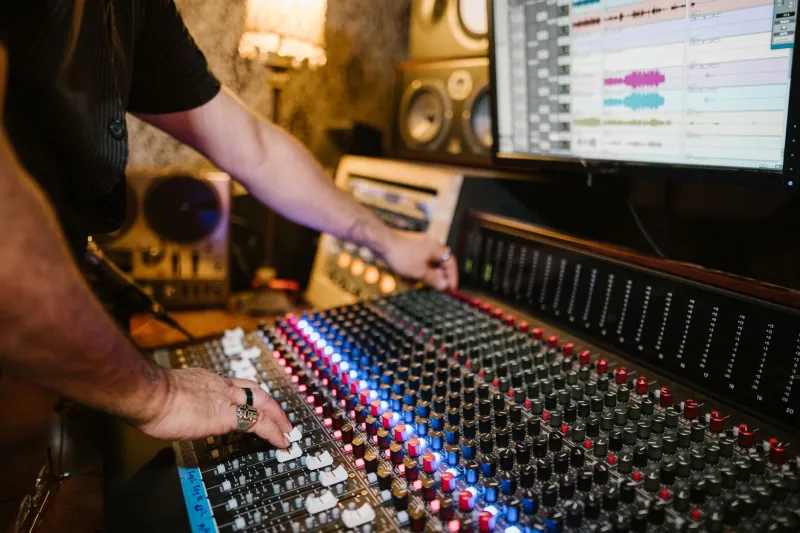
Ask most casual music fans what a mixing engineer actually does, and you'll get a lot of blank stares. The short version: they take all the individual recorded elements of a song — vocals, drums, guitar, synths, whatever — and blend them into a cohesive whole. They balance levels, shape tones, add spatial depth, and make sure the final product translates across every listening environment, from a $4 pair of earbuds to a club sound system cranked to the ceiling.
It sounds technical because it is. But the best engineers aren't just running signal chains and adjusting faders. They're making creative judgments constantly — decisions that fundamentally shape the emotional experience of a record.
"People think of engineering as a service job," says one Brooklyn-based mixer who's worked with several artists now building serious followings across R&B and indie rap. "But every choice I make is a creative choice. Where I put the reverb, how much air I give the vocal, whether the kick drum is punchy or boomy — all of that is storytelling."
That perspective is becoming more common among a younger wave of engineers who came up in the home-studio era, trained partly on YouTube tutorials and partly by doing the work themselves. They don't see a wall between the technical and the artistic. For them, it was never there to begin with.
Why Emerging Artists Are Turning to Independent Engineers
For a long time, the path to a great-sounding record ran straight through expensive studios with house engineers on staff. That model still exists, but it's no longer the only game in town — and for artists without major label backing, it's rarely the first call.
Independent engineers working out of converted apartments, rented suites, and purpose-built home setups have created a parallel infrastructure that's every bit as capable as the traditional kind, often at a fraction of the cost. More importantly, they bring something that a studio staff engineer on a tight session schedule typically can't: investment.
When an independent engineer takes on an emerging artist, they're often buying in on a longer timeline. They're not just there for the session. They're listening to the project as a whole, understanding where the artist wants to go, and making sonic decisions that serve that vision across an entire body of work. That consistency is something money can't always buy.
It also creates a different kind of creative relationship. Artists who might feel intimidated speaking up in a high-pressure studio environment often find it easier to communicate with an engineer they've built trust with over time — someone who knows their references, understands their aesthetic instincts, and isn't going to make them feel stupid for asking a question.
Genre-Hopping as a Superpower
One of the most interesting things about the engineers coming up right now is how comfortably many of them move across genres. Where previous generations often built careers within a specific sound world — a go-to guy for country records, a specialist for hip-hop — today's independent engineers are frequently just as comfortable working on a folk-influenced bedroom pop project as they are on a hard-hitting trap record or a lush neo-soul album.
That versatility isn't accidental. It's a survival skill that became a creative advantage.
Working across genres exposes engineers to a much wider toolkit of techniques. A compression approach borrowed from vintage R&B might be exactly what gives a punk-influenced indie track its character. A spatial mixing strategy developed for ambient electronic music might be what makes an acoustic guitar record feel cinematic. Cross-pollination is where the interesting stuff happens, and independent engineers operating outside genre-specific commercial pipelines are often the first to find it.
For emerging artists who are themselves genre-fluid — and in 2024, that's a significant portion of the most exciting new voices in American music — an engineer who can move with them rather than constraining them to a specific sonic box is invaluable.
Building a Reputation Without a Press Kit
Here's the thing about the engineering world: reputation travels through sound, not through marketing. When a record that an engineer worked on starts getting attention, other artists listen. Producers talk. Other engineers pay attention to the choices being made.
Many of the most in-demand independent engineers working with emerging talent right now built their reputations entirely through word of mouth — often without a website, sometimes without even a proper social media presence. Their calling card is the music itself.
That said, a growing number are starting to recognize the value of a visible presence, particularly on platforms where artists and producers spend time. A well-placed credit on a buzzing project, a thread on X about a specific technique, a short video walking through a mix decision — these things travel, and they're starting to create a new kind of engineer celebrity that didn't really exist before.
Some are going further, developing their own creative brands and positioning themselves not just as service providers but as collaborators with a distinct point of view. Think of it as the producer model applied to the engineering side of the equation — a recognizable sonic signature that artists actively seek out.
The Credit Problem
For all the momentum building around this generation of technical creatives, there's still a persistent structural issue that the industry hasn't solved: credit.
Engineering credits are notoriously inconsistent across streaming platforms. On Spotify, Apple Music, and others, the metadata infrastructure for crediting engineers and mixers is far less robust than it is for artists and producers. Records get uploaded without proper credits all the time, and the people who did the technical heavy lifting end up invisible — even when their work is a significant reason the record sounds the way it does.
Organizations like the Recording Academy have pushed for more consistent crediting standards, and there's been progress. But it remains an uphill battle, particularly at the independent level where the teams are smaller and the administrative infrastructure is less formalized.
For engineers trying to build careers on the strength of their discography, that invisibility has real consequences. You can't point a potential client to a record you mixed if your name isn't on it anywhere.
Hidden Talent, Undeniable Impact
The artists who are blowing up right now — the ones building real fanbases before the industry even knows their names — are almost always surrounded by a small, tight circle of collaborators who believed in them early. And somewhere in that circle, more often than not, there's an engineer.
Not a famous one. Not someone with a wall of platinum records behind them. Just someone who understood what the music was trying to be, and had the skills and the commitment to help it get there.
That's the hidden talent story that almost never gets told. The artists are just the beginning. The real discovery is often the people who made them sound like themselves.