Streaming's New Power Brokers: The Independent Playlist Curators Quietly Replacing A&R
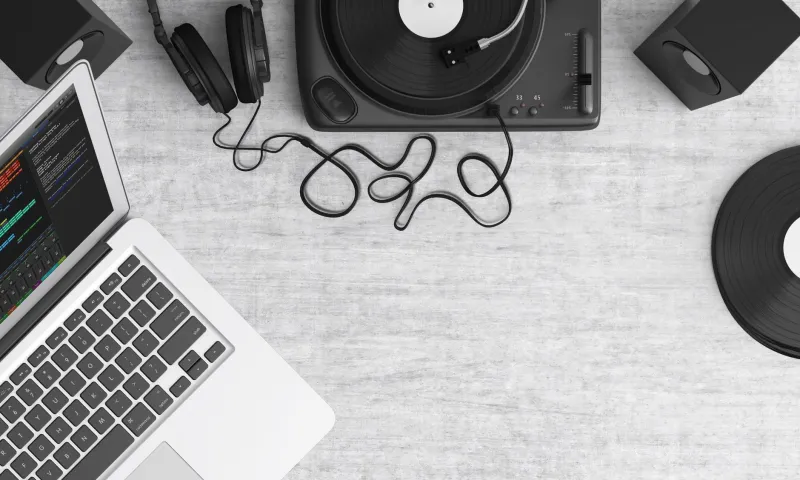
There's a guy in Nashville named Derek who wakes up every morning, brews his coffee, and decides which emerging artists get heard by 200,000 people that day. He doesn't work for a label. He has no official title. His "office" is a corner desk in a two-bedroom apartment he shares with a roommate. And yet, the artists who land on his indie folk Spotify playlist often see their monthly listeners double within a week.
Derek — who asked we not use his last name — is part of a quietly growing class of independent playlist curators who have become some of the most influential figures in the modern music ecosystem. They're not executives. They're not managers. But in a streaming-first world, they might be the closest thing to a gatekeeper that actually matters.
The Shift Nobody Saw Coming
For decades, getting signed to a major label was the golden ticket. A&R reps were the mythologized figures who "discovered" talent, and their approval meant access to radio, retail, and reach. That model hasn't completely disappeared, but its grip on the industry has loosened considerably — and independent curators have stepped into the gap.
Spotify alone hosts over 4 billion playlists. Apple Music and YouTube add millions more points of discovery on top of that. The sheer volume of content means algorithmic recommendations can only do so much. Human curation — someone with taste, context, and a real community — cuts through in a way that an algorithm simply can't replicate.
"People follow my playlist because they trust me," says Marcus, who runs a lo-fi hip-hop channel on YouTube with over 180,000 subscribers. "They know if I put something on there, it's worth their time. That relationship took years to build, but now it means something real."
Marcus earns between $6,000 and $9,000 a month through a combination of YouTube ad revenue, Patreon supporters, and direct partnerships with independent artists who pay a flat fee for promotional placement. He's careful to distinguish this from pay-to-play schemes — he only accepts payment from artists whose music he'd feature anyway.
What These Curators Actually Do
The job looks deceptively simple from the outside. You make a playlist. You add songs. People listen. But the curators who've built real influence are doing something far more strategic.
They study listening behavior. They track which tracks have the best skip rates. They understand the emotional arc of a playlist the way a DJ understands a room — knowing when to bring the energy up, when to let it breathe, and how to introduce something unfamiliar without losing the listener.
Tamika, who curates a series of R&B and neo-soul playlists on Spotify with a combined following of over 300,000, describes her process like editing a magazine. "Every song has to earn its spot. I'm thinking about flow, about mood, about what my listeners are doing when they hit play. Are they driving? Working? Unwinding after a shift? That context matters."
She reviews somewhere between 30 and 50 submission emails a week from artists hoping for placement. Most don't make the cut — not because the music is bad, but because it doesn't fit the specific identity she's built. That selectivity is exactly what makes her influence real.
The Artists Who Figured It Out First
For emerging artists without label backing, landing on the right playlist can be transformative in a way that a single Instagram post or even a modest press feature simply isn't.
Jordan, a 24-year-old bedroom pop artist from Portland, Oregon, had been releasing music for three years with modest results. Last spring, one of his singles landed on a mid-size indie playlist with around 85,000 followers. Within two weeks, his Spotify monthly listeners jumped from 1,200 to 22,000. He sold out a 150-cap venue in his hometown for the first time ever.
"I'd been pitching blogs, reaching out to local press, doing everything I was supposed to do," he says. "One playlist placement did more than two years of that combined."
What Jordan did differently was research. He didn't blast his track to every curator he could find. He spent weeks identifying playlists that featured artists with a similar sonic profile, studied the curator's submission preferences, and wrote a genuinely personalized pitch. "I treated it like applying for a job I actually wanted," he says. "Not copy-paste."
The Business Behind the Playlist
The economics here are more layered than most people realize. The curators building sustainable income aren't just collecting placement fees — they're building media brands.
Some have turned their playlists into newsletters, social media channels, and even small record labels. Others have parlayed their taste-making reputation into consulting gigs with mid-size labels that want a read on what's resonating with independent audiences before they sign. A few have launched their own annual showcases, essentially functioning as festival programmers.
"I think of myself as a media company, not a playlist," says one curator who runs multiple genre-specific channels and brings in close to $15,000 a month across all revenue streams. "The playlist is the product, but the brand is the business."
This isn't universally clean, of course. The space has its share of bad actors — curators who charge fees with no real audience behind them, bots inflating follower counts, and "playlist networks" that promise reach but deliver nothing. Artists navigating this landscape need to do their homework, verify engagement metrics, and look for curators with genuine communities rather than impressive-looking numbers.
Why the Labels Are Paying Attention
Here's where things get interesting. Major labels — the same institutions that once held all the cards — are increasingly treating top independent curators the way they used to treat influential radio DJs. They're reaching out. They're offering exclusives. They're trying to build relationships before those curators become too expensive or too independent to care.
Some labels have started hiring former curators as A&R consultants specifically because those curators have a ground-level read on emerging talent that internal teams have lost touch with. The irony is hard to miss: the industry that once controlled discovery is now paying people outside the system to help them find what they missed.
For the artists still grinding in obscurity, this shift is genuinely meaningful. The old gatekeepers had narrow tastes and narrower networks. Independent curators, by contrast, are scattered across every genre, every subculture, every corner of the internet. There's a playlist for hyperpop fans in their 30s, for fans of gospel-influenced jazz, for lo-fi study music with a Latin flavor. The gates are more numerous now — and more of them are actually open.
The Takeaway for Hidden Talent
If you're an artist still waiting for a label to notice you, it might be time to redirect that energy. The curators are already here. They're already listening. And unlike a label, they don't need a committee meeting to decide whether your music is worth sharing.
Find the ones who genuinely love what you make. Build a real relationship. Pitch with intention. Because in 2024, the most important person in your career might not be wearing a suit — they might just be someone with great taste, a Spotify account, and a morning ritual that includes your music.