Forget the Feature: Why Smart Emerging Artists Are Betting on Each Other Instead of the Big Names
There's a version of the music industry dream that looks something like this: you grind for years in obscurity, a major artist hears your work, drops your name in an interview, and suddenly your streams go from four figures to seven overnight. It's a clean story. It's also becoming less and less the way things actually work.
A different playbook is gaining serious traction in underground creative circles across the US — and it doesn't involve waiting for anyone to hand you a co-sign. Instead, a wave of emerging artists is deliberately choosing to collaborate with other unknowns, building ecosystems of mutual support that are generating something far more durable than a viral spike: real, loyal audiences.
The Math Behind the Move
On the surface, turning down a high-profile feature opportunity sounds like career suicide. Why would anyone pass on exposure to a million-person fanbase in exchange for working with someone who has, say, 8,000 monthly listeners?
The answer has everything to do with conversion — and most artists chasing clout aren't thinking about it hard enough.
When an unknown artist lands a feature with a major name, the traffic bump is real but fleeting. Casual fans of the bigger artist stream the track once or twice, rarely follow back, and almost never convert into long-term supporters. The numbers look good in a screenshot. The actual fanbase barely moves.
Contrast that with what happens when two artists at similar stages of their careers genuinely connect. Their audiences overlap in terms of taste and investment level. Fans who discover Artist A through Artist B tend to stick around, because the introduction came with built-in credibility — not algorithmic accident. The conversion rate is dramatically higher, even if the raw numbers are smaller.
This isn't theory. Independent artists across genres — from lo-fi bedroom pop in Atlanta to experimental hip-hop in Chicago to indie R&B out of Los Angeles — are documenting this exact dynamic in real time.
When Saying No Becomes a Strategy
Consider what's been happening in pockets of the DIY music world over the last couple of years. Artists who've built modest but fiercely engaged followings — think 15,000 to 50,000 monthly listeners — have started turning down opportunities that would have seemed unthinkable to their earlier selves.
One producer based out of Detroit, who's been releasing instrumental projects under a pseudonym for about three years, turned down a placement opportunity with a mid-tier major-label act last year. The reasoning wasn't ego. It was math and creative control in equal measure.
"That placement would've put my name on something I didn't fully believe in," he explained in a recent community forum post that circulated widely in producer Discord servers. "My audience trusts my taste. The second I compromise that for reach, I've traded the thing that actually makes people care about my work."
He instead spent that same season co-producing an EP with two other independent artists he'd met through mutual online communities. The project had no press push, no playlist pitching campaign, and no label backing. It also generated more first-week saves and playlist adds — organic ones — than anything he'd released previously.
The Trust Economy Is Real
What these artists are tapping into is something that marketers have been talking about for years but the music industry has been slow to fully absorb: audiences increasingly value authenticity over association.
For younger listeners especially — the core demographic driving streaming numbers and concert ticket sales — the story behind a collaboration matters as much as the music itself. When two artists who genuinely respect each other's work come together, that narrative is legible. Fans feel it. They share it because it means something.
Contrast that with the cynical feature economy that's dominated mainstream music for decades — where collaborations are brokered by managers, priced out in advance, and designed primarily to move units rather than make art. Even casual listeners have developed a nose for that kind of transaction. It doesn't build community. It just fills a release slot.
The underground artists who are winning right now understand that their audience is their most valuable asset — and that audience was built on trust. Protecting that trust sometimes means walking away from the biggest room in the building.
What the Collectives Are Getting Right
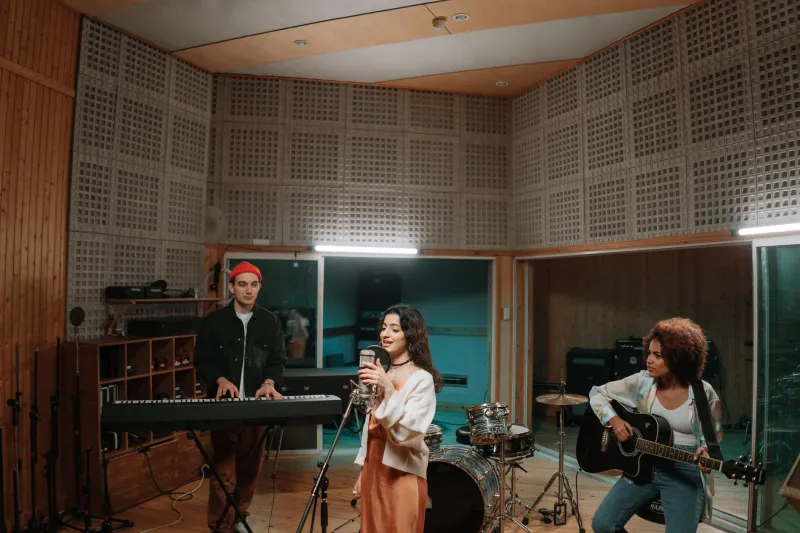
This trend isn't just happening between individual artists — it's crystallizing into something more structural. Informal creative collectives are forming across the country, functioning almost like artist-run micro-labels without the overhead or the contracts.
These groups share production resources, split marketing costs, cross-promote releases, and — critically — co-curate their public-facing identities. When one member of the collective releases something, the whole network amplifies it. The cumulative reach of five artists with 20,000 engaged listeners each starts to look a lot more interesting than one artist with 100,000 passive ones.
There's also a creative benefit that's harder to quantify but just as important. When artists collaborate within a trusted circle, the work tends to be better. There's less pressure to sand down the edges, less incentive to chase whatever sound is trending, and more room to take genuine risks. That creative freedom tends to show up in the music — and listeners respond to it.
The Long Game Versus the Quick Win
None of this means that big-name features are worthless, or that emerging artists should categorically avoid working with more established names. Context matters enormously. A collaboration that comes from genuine creative alignment, regardless of the other artist's profile, can be exactly the right move.
What's changing is the reasoning behind the decision. The artists who are building the most durable careers in independent music right now aren't asking "how many streams will this get me?" first. They're asking whether the collaboration serves their creative vision, whether it speaks to the audience they're actually trying to build, and whether it maintains the integrity that made that audience show up in the first place.
That's a fundamentally different calculation than the one the traditional industry taught artists to make — and it's producing fundamentally different results.
The hidden talent in all of this isn't just musical. It's strategic. The emerging artists who are going to define the next era of independent music aren't the ones with the most impressive features on their résumé. They're the ones who understood, early enough to matter, that the most powerful thing they could build wasn't a streaming number. It was a room full of people who genuinely believed in them.
And they built that room together.