The Sound Architects Nobody Talks About: Meet the Engineers Quietly Reinventing Podcasting

Let's talk about what you actually hear when you listen to a great podcast.
Not the host's voice. Not the topic. Not the guest. The thing underneath all of that — the texture of the room, the way the music beds fade without calling attention to themselves, the subtle processing that makes a home USB mic sound like it belongs in a professional environment. That craft has a name, and it has practitioners, and almost none of them are getting the credit they deserve.
Welcome to the underground of independent audio engineers — the people quietly becoming the backbone of podcasting's most exciting creative moment.
A Medium That Grew Faster Than Its Infrastructure
Podcasting's explosion over the last decade created a strange imbalance. The tools to record became incredibly accessible — a decent mic, a laptop, a free DAW, and you're technically in business. But accessibility and quality are two very different things, and the gap between them is enormous.
The result is a medium where the ceiling for production quality is genuinely high, but the average is still pretty rough. Listeners have become more sophisticated. They may not be able to articulate exactly why a show sounds cheap, but they feel it — and they churn.
This is the gap that a growing community of independent audio engineers has moved into. They're not attached to major studios or locked into network deals. They work directly with creators, often through relationships built entirely online, and they bring a level of technical and creative sophistication that most podcast hosts didn't even know they were missing.
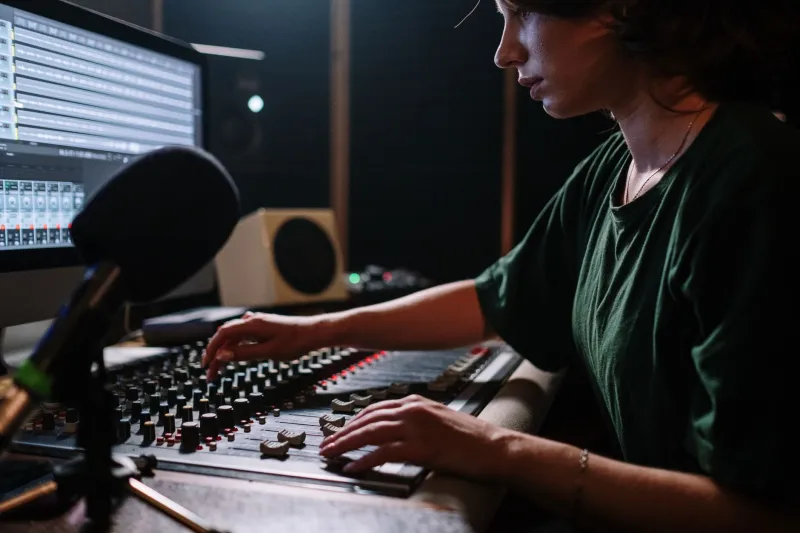
"Most podcasters think audio engineering is just editing out the 'ums,'" says one engineer who works with a roster of independent shows across true crime, tech, and narrative nonfiction. "What I actually do is closer to sound design for film. I'm building an emotional architecture."
The Discord-and-Patreon Economy
What makes this community particularly interesting from a business standpoint is where and how they've built their practices. Very few of them are relying on traditional studio pipelines or agency referrals. Instead, they've constructed their own ecosystems — and those ecosystems are generating real, sustainable income.
Patreon has become a surprisingly powerful platform for this group. Several engineers run subscription communities where they share technique breakdowns, process walkthroughs, and gear reviews aimed specifically at other creators and aspiring engineers. The content is technical but accessible, and it serves a dual purpose: it generates direct revenue, and it positions the engineer as an authority in a niche where authority translates directly into client trust.
Discord communities are the connective tissue. Some of the most influential audio engineers in the independent podcast space built their initial client bases entirely through Discord servers dedicated to podcasting, audio production, or specific genre communities. Word of mouth in these spaces moves fast, and a single recommendation from a respected voice can fill a client calendar for months.
Direct-to-creator services are the third pillar. These engineers aren't pitching to networks or production companies — they're going straight to the shows themselves. They offer everything from single-episode mixing to full ongoing production partnerships, often at price points that make sense for independent shows that are generating real revenue but aren't at the scale of a Spotify exclusive.
What They Actually Do (And Why It's Harder Than It Looks)
The work itself is worth understanding, because it's genuinely complex and it's consistently undervalued.
At the basic level, yes, it's editing and mixing — cleaning up audio, leveling voices, removing background noise. But the engineers doing interesting work in this space are operating at a much higher level than that.
Sound design for narrative podcasts, for instance, is a discipline unto itself. Building an audio environment that puts the listener inside a story — using ambience, music, foley-style elements, and careful spatial processing — requires both technical expertise and genuine creative instinct. The best narrative podcasts in the country are built by people who understand both dimensions, and a significant number of those people are working independently, outside of any traditional studio structure.
There's also the emerging discipline of podcast-specific mastering — optimizing audio not just for quality but for the specific loudness standards, compression characteristics, and playback environments of streaming platforms. It's a niche within a niche, but creators who discover it tend to become very loyal clients.
"I had a show that was doing fine numbers, but the host kept wondering why it felt less 'premium' than shows with bigger budgets," recalls one engineer based in Chicago. "We spent two sessions rebuilding the signal chain and rethinking the music strategy. The next episode, the host got three unsolicited emails from listeners commenting on how the show sounded different. That's the job."
The Skills Gap Nobody's Addressing
Here's a structural issue that's actually creating opportunity for independent engineers: the formal education pipeline for audio production is almost entirely oriented toward music and film. Podcast-specific audio design is barely taught as a standalone discipline in any major program.
That means the people who are actually good at it learned through doing — through obsessive self-education, through community knowledge sharing, through years of building and iterating on their own. It's an apprenticeship model that happens entirely in public, documented in forum posts and YouTube tutorials and Discord conversations.
This creates a real knowledge advantage for the engineers who have put in the time. They understand things about podcast audio that most formally trained engineers don't — not because formal training is bad, but because it simply wasn't designed for this medium.
Some of the more entrepreneurially minded engineers in this space are starting to formalize that knowledge into courses and workshops. A few have built six-figure education businesses on top of their client work, teaching the next generation of podcast engineers the craft that no MFA program is offering.
The Bigger Opportunity
The podcast industry is still in a relatively early phase of professionalizing its production standards. The shows that sound genuinely great right now are the exception, not the rule — and listener expectations are only going to keep rising.
That creates a long runway for independent audio engineers who are building their expertise now. The traditional studio system is too slow and too expensive to serve the long tail of independent creators who are generating real audiences and real revenue. The gap between what those creators need and what the traditional industry offers is exactly where this underground has built its home.
At The Hidden Talents, we've covered a lot of invisible infrastructure — the people who build the systems that make the visible stuff possible. The audio engineers reshaping podcast culture might be the purest example of that dynamic we've seen yet. They're not trying to be famous. They're trying to make the thing sound right.
And increasingly, they're getting paid very well to do exactly that.