Four Walls, Infinite Sound: Why the Smartest Music Creators Are Building Empires From Their Bedrooms
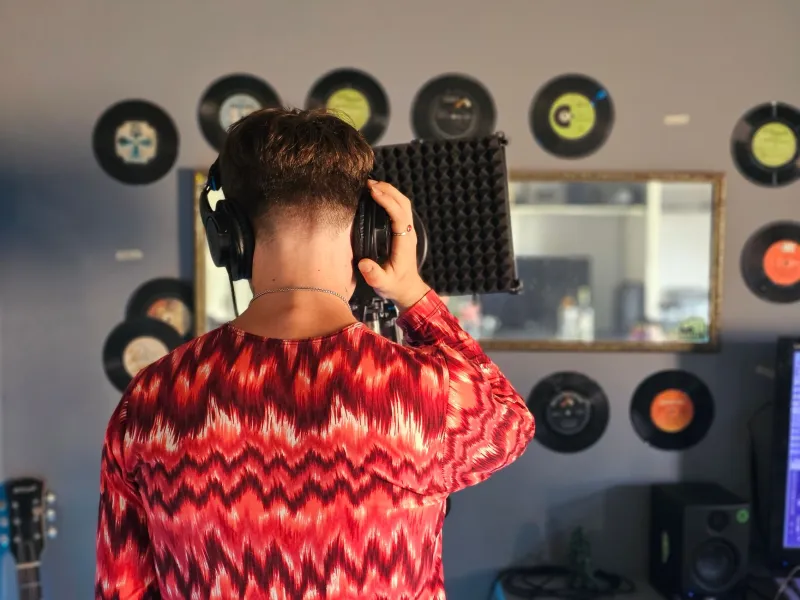
There's a quiet revolution happening in spare bedrooms, converted closets, and basement corners all across America. It doesn't make headlines the way a major label signing does. There's no press release, no publicist, no glossy announcement. There's just a creator, a microphone, a DAW, and a direct line to an audience that's choosing to pay for what they love.
The bedroom studio isn't new — artists have been recording at home since the cassette era. But what's different now is the ceiling. Today's home setups can produce work that is genuinely, measurably indistinguishable from what comes out of a $500-an-hour commercial studio. And the business infrastructure to monetize that work independently has finally caught up with the creative tools. The result is a generation of music professionals who aren't waiting to be discovered by the industry — they're building their own.
The Gear Gap Has Closed
A decade ago, the gap between a bedroom setup and a professional studio was real and audible. Today, that argument barely holds up.
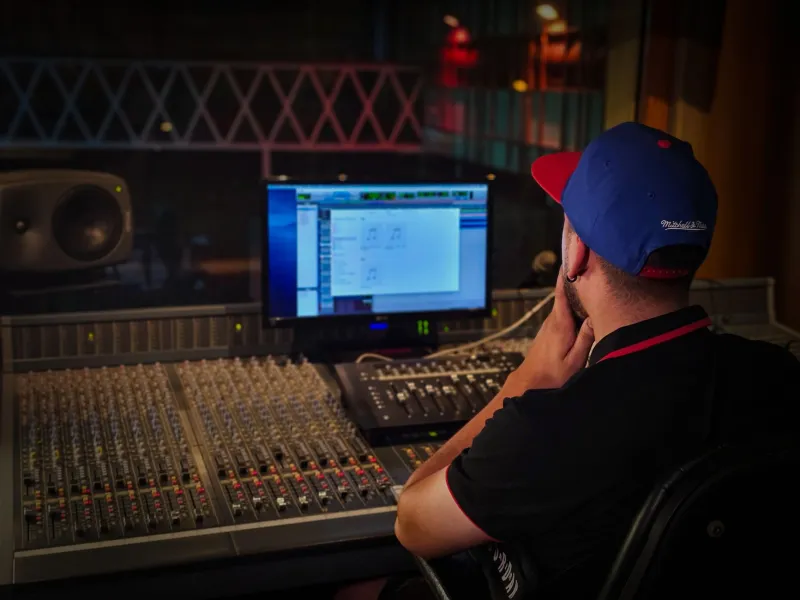
For somewhere between $1,500 and $4,000, a producer can assemble a home studio — interface, condenser mic, studio monitors, acoustic treatment, and a capable computer — that rivals gear available in mid-tier commercial spaces. Software like Ableton Live, Logic Pro, and FL Studio has become so sophisticated that the tools themselves are no longer the limiting factor. The limiting factor is talent and taste, which, conveniently, can't be purchased.
Alex Reyes, a 31-year-old producer and mix engineer from Austin, Texas, has been working entirely from his home studio for six years. His client list includes independent artists with tens of millions of streams, and his annual income has cleared six figures for the past three consecutive years. "I've had people ask me what studio I'm working out of when they hear my mixes," he says. "When I tell them it's my apartment, they don't believe me. That's how far the tools have come."
The psychological shift matters just as much as the technical one. When artists and engineers stop believing they need a commercial space to produce professional-quality work, they stop waiting for permission to start.
The Label Math Doesn't Add Up Anymore
Let's talk about money, because that's ultimately what makes this shift structural rather than just cultural.
A traditional record deal — even a favorable one — typically means the label recoups recording costs, marketing expenses, and advances before the artist sees a meaningful royalty check. Masters are often signed away. Creative control is negotiated, not guaranteed. And the timeline from signing to release can stretch across years.
Contrast that with the independent path. Platforms like DistroKid, TuneCore, and CD Baby allow artists to distribute music globally for a flat annual fee and keep the vast majority of their royalties. Bandcamp lets creators sell directly to fans with a much smaller platform cut than any streaming service. Patreon and Substack have made subscription-based fan relationships viable for niche artists with highly engaged audiences.
Naomi Harte, a 26-year-old singer-songwriter and self-taught audio engineer from Nashville, turned down a development deal two years ago. It was, by her own admission, a terrifying decision. "The label was offering something real — money, a team, a shot at radio. But they also wanted 50% of my publishing and approval rights over my releases. I did the math and realized I'd have to sell a lot of records before I ever saw meaningful income."
Today, Naomi earns roughly $8,500 per month across streaming royalties, sync licensing placements, a Patreon membership tier, and direct album sales. She records, mixes, and masters everything herself. "I work harder than I ever would have under a label deal," she admits. "But every dollar I earn is mine, and every creative decision is mine. That's not something I'd trade."
Sound Engineers Are Leading the Charge
If the artist's case for independence is compelling, the case for independent sound engineers and producers is even stronger — and it's a part of the story that doesn't get nearly enough attention.
Traditionally, a studio engineer built their career by working up through commercial studios — assistant engineer, staff engineer, eventually a senior role with a client list. That path still exists, but it's no longer the only one, and for many it's not the best one.
Tyler Moss, a 33-year-old mix engineer from Brooklyn, built his entire career online. He started posting mix breakdowns and audio education content on YouTube, built an audience of working musicians who needed affordable, high-quality mixing services, and turned that audience into a client base. He now charges $600–$900 per mix, books out two months in advance, and has never worked a single day in a commercial studio.
"The internet let me skip the entire apprenticeship phase," Tyler says. "I learned by doing, documented my process publicly, and that documentation became my portfolio and my marketing at the same time. It's genuinely a better system for people who are willing to put in the work."
Is This Sustainable, or Is It a Bubble?
Not everyone is convinced the bedroom studio economy is built to last. There are legitimate questions worth sitting with.
The streaming economy, while accessible, pays fractions of a cent per play — a model that works for artists with massive catalogs and engaged fanbases, but struggles to support emerging creators in their early years. Platform policies change. Algorithm shifts can devastate a creator's reach overnight. And the market for independent music services — mixing, mastering, production — is becoming increasingly competitive as more people enter the space.
Industry analyst and music business consultant Rachel Dunne, who works primarily with independent artists, sees both promise and fragility in the current moment. "The infrastructure for independent success is genuinely better than it's ever been," she says. "But the 'bedroom studio millionaire' narrative is being told through the lens of the people who made it work. For every Alex Reyes or Naomi Harte, there are hundreds of equally talented creators who built the setup, put in the hours, and didn't break through. We need to be honest about those numbers."
She's right. The bedroom studio doesn't guarantee success any more than a label deal does. What it offers is a different kind of risk — one where the upside belongs entirely to the creator, but so does the downside.
The New Definition of "Making It"
Perhaps the most important shift happening in this space isn't technological or financial — it's philosophical. The definition of success in music is being rewritten in real time.
For the bedroom studio generation, "making it" doesn't necessarily mean a Grammy, a tour bus, or a platinum plaque. It might mean a steady six-figure income doing work you love, on your own terms, with an audience that genuinely connects with what you're making. It might mean owning your masters, your brand, and your creative direction without compromise.
That's not a lesser version of success. For a growing number of music's most talented hidden voices, it's the only version worth chasing.